Heart Rate Variability: A Guide

HRV is one of the best signs of how well you recovered overnight. Here’s what it is, why it matters, and what hurts it while you sleep.

Your Heart Doesn’t Beat Like a Clock

Most people think a healthy heart beats in a perfectly even rhythm — like a metronome. But that’s actually not true.


A healthy heart speeds up a little when you breathe in and slows down a little when you breathe out. The small gap between these changes is called heart rate variability, or HRV.


The bigger that gap, the more relaxed and recovered your body is. The smaller the gap, the more stressed or tired your body is.


Think of it like a rubber band. A healthy nervous system stretches and relaxes easily. A worn-out one stays stiff.

Why HRV Matters for Sleep

Sleep is the main time your body repairs itself. Your heart rate drops, your muscles relax, and your nervous system shifts into recovery mode.


HRV rises during good sleep. It falls when sleep is poor.


People who track their HRV with devices like Oura or Garmin often notice this pattern: after a bad night, their HRV is lower. After a great night of deep, uninterrupted sleep, it’s higher.


Low HRV over time is linked to feeling more tired, getting sick more easily, and recovering more slowly from exercise. High HRV is linked to better energy, sharper focus, and a more balanced mood.


So if you want to improve your HRV, the most important place to start is your sleep.

What Happens to HRV When You Sleep

When you fall into deep sleep, your nervous system shifts into what’s called the parasympathetic state. That’s the body’s “rest and recover” mode.

In this state:

  • Your heart rate slows down
  • Your breathing slows and deepens
  • Your HRV rises
  • Your body releases hormones that repair muscles, fight illness, and restore your brain

This is the kind of sleep that actually makes you feel better the next day. And it depends almost entirely on your nervous system being able to relax fully.


The problem is that many things can interrupt this process — and one of the most common ones happens so quietly that most people never notice it.

The Hidden Thing That Hurts Your HRV at Night

When you breathe through your mouth while you sleep, your body doesn’t fully switch into recovery mode.


Here’s why. Your nose has a direct connection to the part of your nervous system that controls relaxation. When air flows through your nose, it sends a signal to your brain that says: “we’re safe, slow down, recover.”


Your mouth doesn’t have that connection.


When you breathe through your mouth at night, your body stays in a mild stress state. Your heart rate stays a little higher than it should. Your HRV stays lower. You cycle through lighter sleep stages instead of reaching the deep sleep your body needs.


You might sleep for 8 hours and still wake up tired. Not because you didn’t sleep long enough — but because your body never fully let go.

Why Mouth Breathing Happens at Night

Most people don’t choose to breathe through their mouth. It happens because their nose gets in the way.


The nasal valve — the narrowest part of your nose, just inside the nostril — can become partially blocked by:

  • Congestion from allergies or a cold
  • Dry air (especially during winter heating season)
  • A slight bend in the nasal passage
  • The natural narrowing that happens when you lie down

When breathing through the nose feels like work, the body gives up and switches to the mouth. This can happen after you fall asleep, without you ever knowing.

How Nuku Supports Your HRV While You Sleep

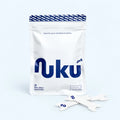
Nuku nasal strips gently lift the sides of your nose from the outside, opening the nasal valve so that air flows through easily.


When your nose is open, nasal breathing becomes the natural default — even in deep sleep. Your nervous system gets the relaxation signal it needs. Your body can shift into genuine recovery mode.


The result is more time in deep sleep, lower heart rate through the night, and higher HRV by morning.


There’s no technique to learn and nothing to do differently. You put the strip on before bed, and your body takes care of the rest.

The Bottom Line

HRV is a simple signal: high means recovered, low means not. And the single biggest thing that drives it down while you sleep — without you knowing — is breathing through your mouth.


Keeping your nose open at night is one of the most direct things you can do to improve your sleep quality and recovery.


That’s exactly what Nuku is designed to do.

References
 

Porges, S.W. (2007). The polyvagal perspective. Biological Psychology.
 

Shaffer, F., & Ginsberg, J.P. (2017). An overview of heart rate variability metrics and norms. Frontiers in Public Health.
 

Thayer, J.F., & Lane, R.D. (2000). A model of neurovisceral integration in emotion regulation and dysregulation. Journal of Affective Disorders.
 

Lehrer, P.M., Vaschillo, E., & Vaschillo, B. (2000). Resonant frequency biofeedback training to increase cardiac variability. Applied Psychophysiology and Biofeedback.